Guide
How to ask for a raise: 6 steps and data from 1,000 job ads
How to negotiate a higher salary in an interview or pay review. Advertised salaries by field in Czechia, a 6-step method and phrases that work.
Pay is still an awkward topic in Czechia, and many people lose money because of it. Walk into a negotiation with data and a specific figure and your position is much stronger. Here is a method that works in interviews and in pay reviews.
Key points
- The median advertised salary varies by more than CZK 20,000 a month between fields.
- Negotiate with a specific figure based on market data, not a feeling.
- Anchor high and concede slowly, the first number sets the direction.
- If the employer cannot raise pay, negotiate benefits and the date of the next review.
Start with data: what employers actually offer
We analysed 1,064 job ads with a stated salary from October 2026. The median midpoint of the salary range shows what employers offer in each field.
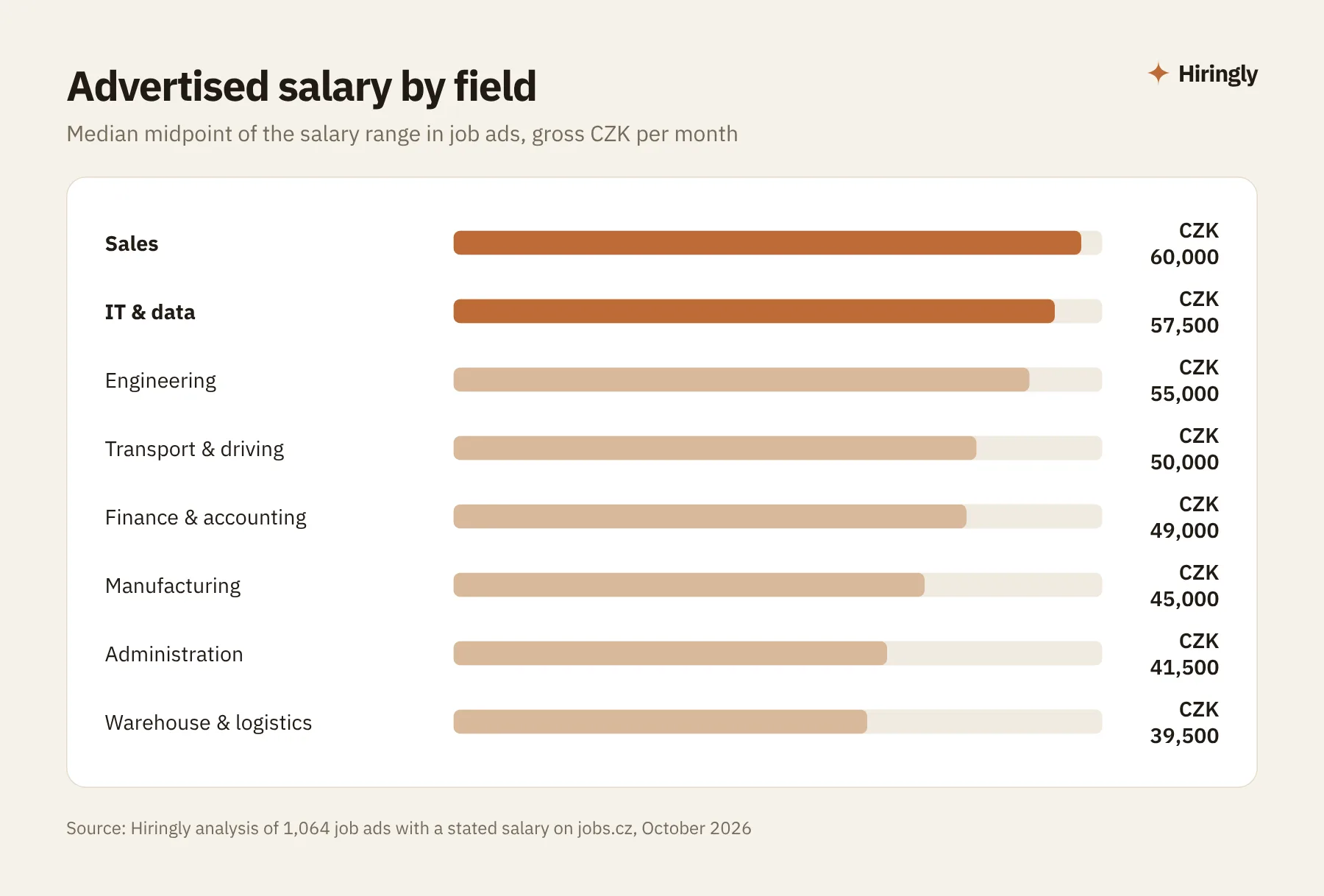
| Field | Median advertised salary (gross monthly) |
|---|---|
| Sales | CZK 60,000 |
| IT and data | CZK 57,500 |
| Engineering | CZK 55,000 |
| Finance and accounting | CZK 49,000 |
| Administration | CZK 41,500 |
| Warehouse and logistics | CZK 39,500 |
A city-by-city comparison is in Czech salaries by city and field. For context, the Czech minimum wage in 2026 is CZK 22,400 a month, according to BusinessInfo.cz.
6 steps to a higher salary
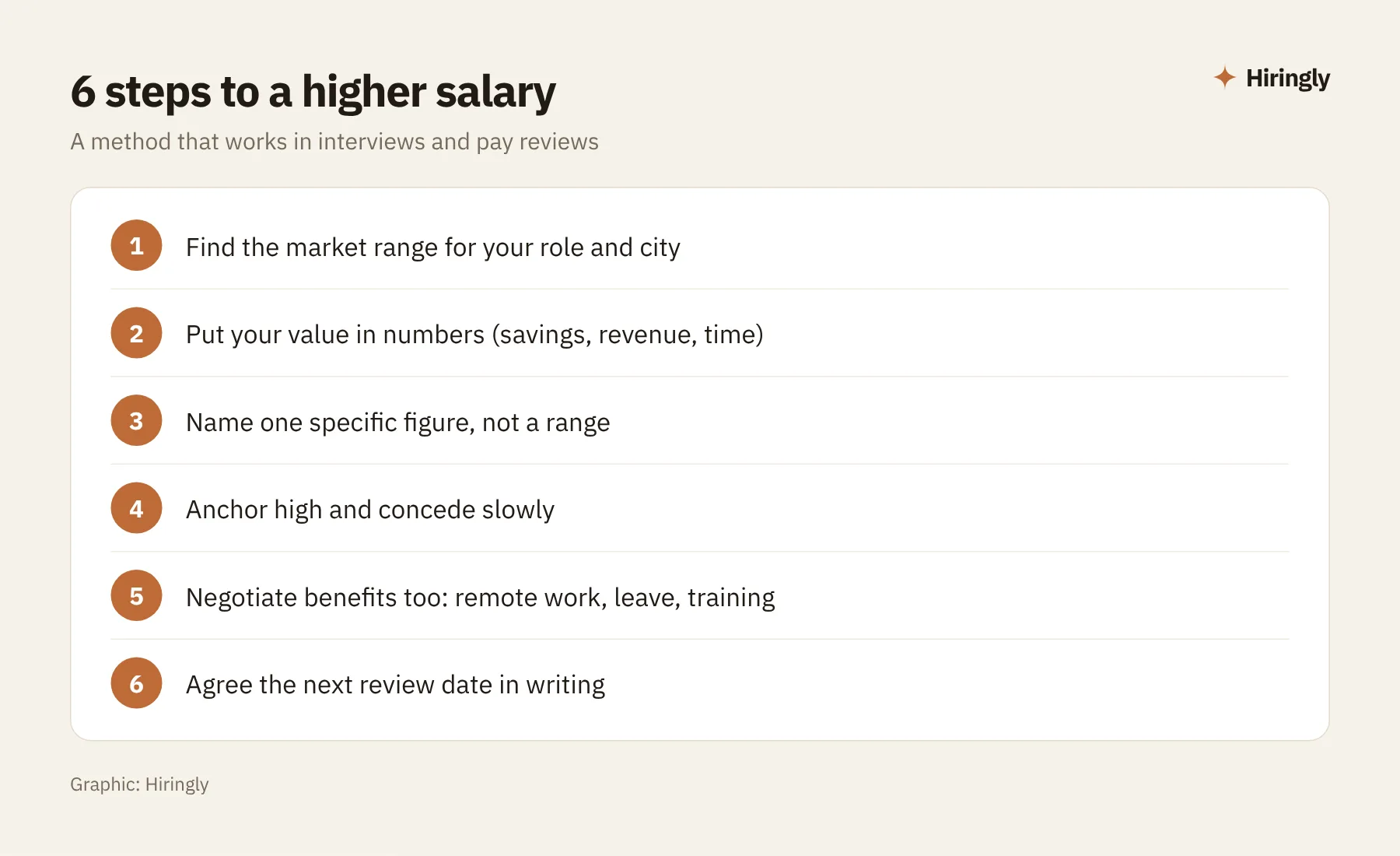
1. Find the market range
Go through 10 to 20 ads for the same or a similar role in your city. Note the stated salaries and work out the midpoint. On the Hiringly job board you can sort openings by highest salary.
2. Put your value in numbers
Employers do not care how much you need, but how much you bring. List concrete results: revenue, time saved, projects delivered, new customers.
3. Name a specific figure
A range like "50 to 60 thousand" will be read as 50 thousand. Say one number, ideally slightly above your target.
4. Anchor high and concede slowly
The first number on the table sets the direction. If the employer offers less, do not back down immediately. Ask what it would take to reach your figure.
5. Negotiate benefits too
When the salary budget hits a ceiling, open other items:
- remote work or a shorter working week,
- extra days of leave,
- a budget for training and certifications,
- a performance or signing bonus,
- a pension savings contribution.
6. Agree the next review in writing
If more is not possible today, agree a specific date and conditions for the next review, for example after the probation period. Get it confirmed by email.
Phrases that work
| Situation | What to say |
|---|---|
| Question about expectations | "Based on the market and my experience, I expect CZK 58,000 gross." |
| Low offer | "Thank you. What would it take for us to get to CZK 58,000?" |
| Pay review | "Over the past year I achieved these results. I propose an adjustment to…" |
| Employer cannot raise pay | "I understand. Can we talk about benefits and the date of the next review?" |
Never use personal expenses, such as a mortgage, as the reason for a higher salary. Always argue with the value you bring.
Pay transparency is coming
The EU Pay Transparency Directive requires member states to introduce rules under which candidates learn the pay range before the interview and employers may not ask about current salary. The exact form in Czech law depends on transposition, so keep an eye on the current state.
FAQ
When is the best time to ask for a raise?
For a new job, before you sign the contract. With your current employer, after a successful project, at your annual review or when you take on new responsibility.
How much should I ask for when changing jobs?
Market data for your role and city decides. If you are below the median today, aiming for market level is realistic. If you are above it, argue with concrete results.
Do I have to disclose my current salary in an interview?
No. It is enough to say what you expect in the new role.
What if the employer says no?
Ask under what conditions a raise would be possible and agree a review date. In the meantime, check what other companies offer.
Is it worth negotiating for a first job?
Yes, but more carefully. Graduates often have more leverage on benefits, training and a quick review after probation than on the starting salary itself.
AI recommends, a human decides.
Hiringly shows the reasoning for every candidate, stores data in the EU and never rejects anyone automatically.